Everyone Brought Emotional Baggage. One of Them Brought a Soup Ladle.

A retired thief, a grieving warrior, an immortal candy vendor, a kobold in a fake beard, and a wizard who studies dreams walk into a festival. This is not the setup to a joke. Well, it is, but it's also the setup to the kind of story where you laugh until someone mentions their dead husband and then suddenly you're crying into your reading device of choice at 2 AM wondering what happened to your evening.

The Dreamweaver's Lament is a fantasy novel about five strangers who came for the festival and stayed for the emotional devastation. It's got undead party crashers, philosophical soup prophets, a stove with opinions, and the kind of found family energy that makes you want to hug fictional characters and then feel weird about it.
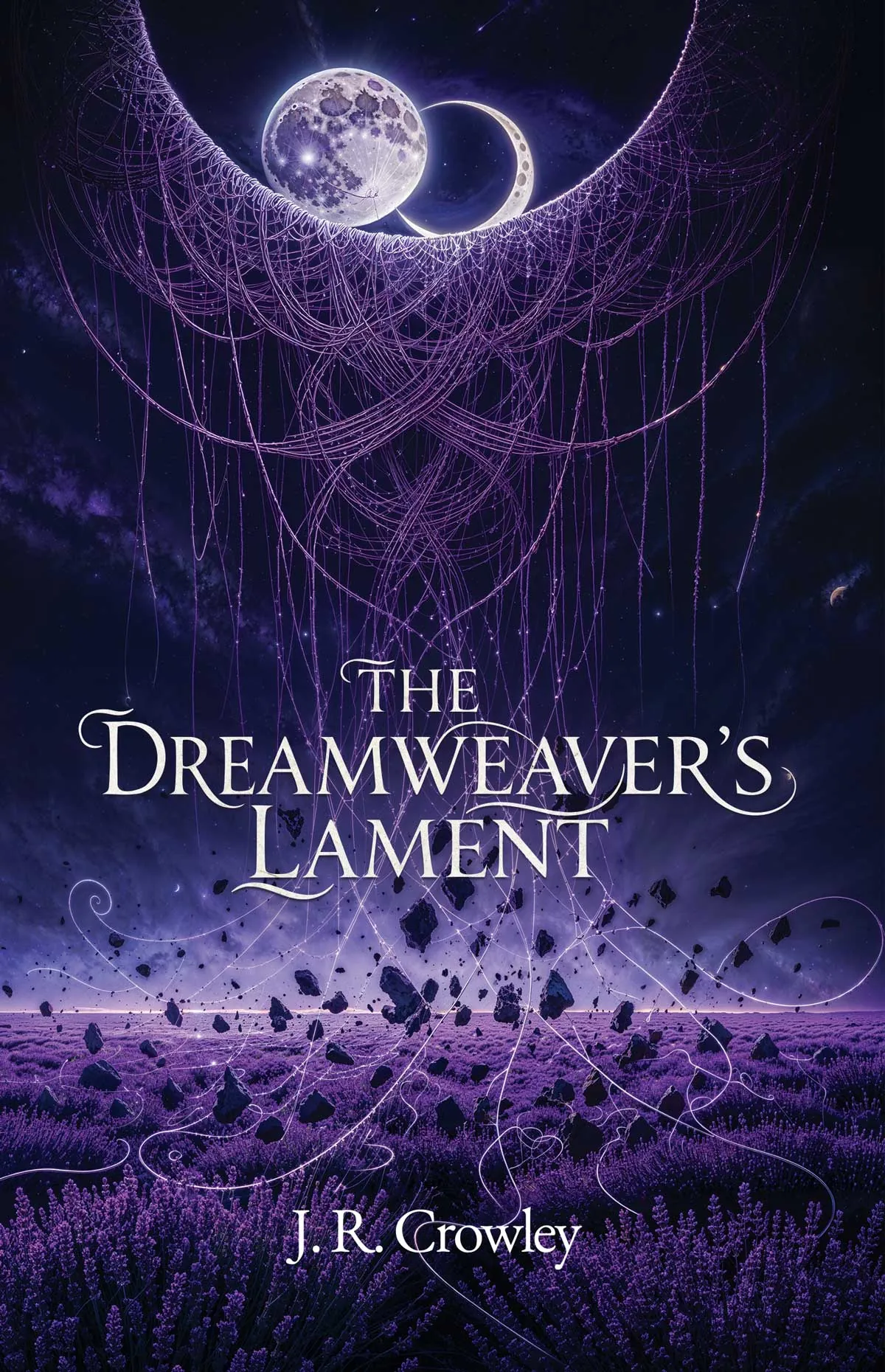
Book Cover

Have you ever tried to fight a god armed only with a soup ladle and decades of emotional baggage? It goes about as well as you'd expect.

Rhonda is a retired thief who hasn't stolen anything in years except the occasional good night's sleep. Lian is a warrior who lost the one person worth fighting for. Deni peddles candy with a smile she's had centuries to practice. Marmaduke is a merchant of modest talent and spectacular facial hair, only one of which is real. And Lyra studies dreams, which is unfortunate, because the dreams have started studying back.

When a dead man walks through the Summer Solstice Festival and reaches for a child, the five must decide what's more terrifying: the thing that's hunting them, or being honest with a stranger.

Whispers from the Dreamscape

"

"I didn't ask to be in this book. I didn't ask to have feelings. I certainly didn't ask for the chapter where I cry into stew. One star."

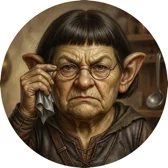
Rhonda

Retired Thief

"

"A story where the funniest character is also the loneliest, and the book never once asks you to choose which one to take seriously."

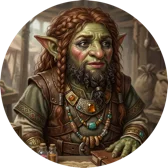
Mira Mira Ondawahl

Merchant of Fine Curiosities

"

"This book delivers something the fantasy genre has been circling for decades without landing: a story where the broken people don't get fixed. They get company. That's a quieter promise than most novels dare to make, and a harder one to keep."

Lyra Thornwind

Department of Oneiric Studies

A Few Pages from the Archive

01.

On the Art of Selling Rocks

In which a kobold disguised as a dwarf discovers that geology is mostly about confidence.

"Now this," Mira said, holding one of her finest crystals up to the light with the practiced reverence of someone who definitely knew what they were looking at and wasn't just hoping the customer would be impressed by theatrical squinting, "is clearly a stone of considerable... stoneness."

The customer, a nervous-looking merchant who'd been browsing her wares for ten minutes without committing to a single purchase, squinted at the crystal with the expression of someone who suspected they were about to be robbed but couldn't quite figure out the mechanism. "It looks like a rock."

"It looks like a rock," Mira agreed with the confidence of someone whose entire understanding of gemology came from a single afternoon spent reading "Shiny Rocks and Where to Sell Them" by someone who'd clearly never found any, "in the same way that a diamond looks like a rock, or the way a dragon egg looks like a rock. Many of the world's most valuable objects look like rocks. That's basically the first rule of geology. See how it catches the light? That's the universal sign of... luminous potential. Quite rare in stones that lack such properties. Fifteen gold, and honestly I'm losing money at that price."

Although honestly, the virgin sacrifice thing had always seemed unnecessarily specific and logistically nightmarish. What was wrong with sacrificing married people? They'd had more time to enjoy life. If anything, that seemed fairer. Plus, how exactly were you supposed to verify? Did dragons of old carry around some sort of virginity authentication scroll? Was there a questionnaire? Please check the appropriate box: Virgin, Not Virgin, It's Complicated, Prefer Not to Say. The whole system seemed designed by someone who'd never actually tried to organize a proper sacrifice. Probably a committee. It had that committee feel to it.

On the Logistics of Sacrifice

02.

In which a descendant of dragons considers the administrative failures of her ancestors.

03.

On Stew and Stubborn Memories

In which a bowl of soup commits an act of emotional violence.

The first taste hit her like a punch from a very small, very determined fist.

Her glasses fogged. The noise of the festival fell away.

"More rosemary, you said?" Tibbo's voice, clear as the day she lost it, echoed from somewhere behind her ribs. "You sure? It's not exactly traditional for stolen bread."

"Since when do we do traditional?" she'd snapped, but she was laughing, and he was grinning that crooked grin that could charm locked doors into opening themselves. The firelight danced across his green cheeks as he sprinkled more herbs into the pot with theatrical flourish.

"Fair point, my light-fingered love. Though I maintain that adding rosemary to everything doesn't make you a proper cook."

"I'm not trying to be proper anything," she'd said, stealing the spoon from his hand to taste the results. "I'm trying to make food that doesn't taste like boot leather and regret."
"Mission accomplished." He'd leaned over to kiss her temple, his voice warm against her ear. "This tastes like home."

"Memories can be stubborn things, can't they?"

Rhonda's glasses had fogged completely. She blinked hard, the festival swimming back into focus around Old Man Cinder's gentle voice. Her hand was shaking. Not trembling. Shaking. And somehow the bowl was empty.

"I don't know what you're talking about," she said automatically, her voice coming out rougher than intended.

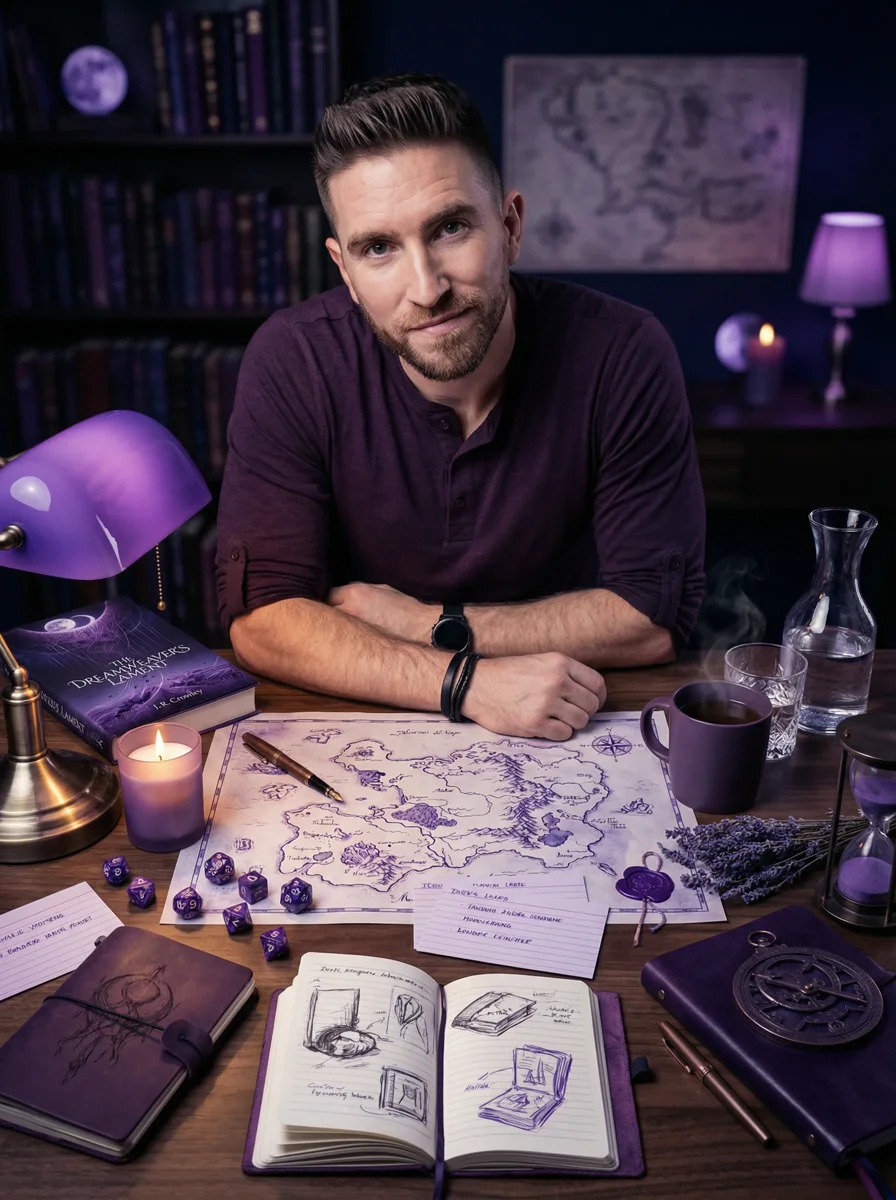
J. R. Crowley

The Author

About J. R. Crowley

J. R. Crowley is a software developer by trade, which means he spends his days convincing machines to do things they'd rather not and his evenings convincing fictional characters to do things they definitely shouldn't. He has been playing Dungeons & Dragons for longer than is strictly advisable and reading fantasy novels for longer than that. At some point during a one-shot campaign, five characters walked into a festival and refused to leave his head afterward, which he considers a form of haunting that no amount of debugging can fix.

When not writing or rolling dice, he can be found arguing about type systems, maintaining opinions about coffee that border on philosophy, and reading books at a pace that suggests he's being chased. He lives in Berlin, which is a real place despite sounding like it belongs in a fantasy novel.

The Dreamweaver's Lament is his first novel and, if the characters finally leave him alone after this, possibly his last. He is not optimistic about this.

A Word from Your Humble Merchant

Ladies, gentlemen, and entities of indeterminate classification — allow me, Mira Mira Ondawahl, traveling merchant of fine curiosities and exceptional literary taste, to present an opportunity of truly luminous potential.

This book — and I say this as someone who has personally survived its contents — is a work of considerable... bookness. It contains characters of remarkable depth, humor that would make a dragon choke on its own fire, and at least three chapters that will make you cry in ways you will later deny to your friends. I have inspected every page with the same professional rigor I bring to my gemstones, and unlike my gemstones, this one is actually worth what you're paying for it.

Now, the book isn't quite ready yet. The author is doing whatever it is authors do in the final stages — probably staring at a wall and questioning his life choices. But when it emerges, blinking, into the light of day, you'll want to be the first to know. Trust me. I'm a merchant. Would I lie to you?

Don't answer that.

— Mira Mira Ondawahl, Archivist of Fates